
Modern Abstract Art for Home: Make Your Walls Speak
Key Takeaways
- Modern abstract art instantly adds personality, depth, and a contemporary feel to any room, with no interior design degree required;
- The right abstract style (minimalist, bold, or geometric) depends on your existing color palette, room size, and the mood you want to create;
- Combining abstract wall art with personal photos on a gallery wall is one of the most effective ways to make your space feel both curated and uniquely personal;
- With Mixtiles' adhesive, repositionable tiles, you can hang, rearrange, and refresh your modern abstract art display without ever damaging your walls.
Modern abstract art has gone from gallery walls to living rooms, and it's easy to see why. Bold brushstrokes, fluid shapes, and unexpected color pairings can transform a blank wall into a conversation piece. But knowing where to start, which style to choose, and how to pull it all together is where most people get stuck. This guide walks you through practical tips to confidently bring modern abstract art into your home, room by room and style by style.
Ready to put abstract art on your walls today? Explore our collection of beautiful wall arts, or turn your favorite designs into stunning canvas prints.
What Exactly Is Modern Abstract Art, and Why Does It Work So Well at Home?
Modern abstract art is a style of visual art that moves away from literal representation. Instead of depicting recognizable objects or scenes, it uses shapes, colors, lines, and textures to express emotions, ideas, and concepts. Think fluid brushstrokes in deep blue and gold, geometric forms in black and white, or layered acrylic washes in warm earthy tones. If you want to explore the history and principles behind this style in more depth, our guide to what abstract art is offers a great starting point.
The reason modern abstract wall art works so well in home decor is precisely this openness. Because abstract art doesn't show a specific object or scene, it rarely clashes with your existing furniture, textiles, or interior style. A bold abstract canvas painting can complement a clean Scandinavian interior just as naturally as it energizes a rich, eclectic space.
Abstract art also invites personal interpretation. Two people can look at the same piece and feel entirely different things, which makes it a natural conversation starter. Whether you choose a large abstract canvas for the living room or a small minimalist abstract print for the bedroom, the piece becomes yours the moment you hang it.
How Do You Pick the Right Abstract Art Style for Your Space?
Choosing the right style of modern abstract art comes down to three things: your existing decor, the room's purpose, and the mood you want to create. The table below gives you a quick reference for matching abstract art styles to your space.
|
Style |
Key Colors |
Best Rooms |
Mood Created |
|---|---|---|---|
|
Minimalist Abstract |
Beige, white, grey |
Bedroom, home office |
Calm, focused |
|
Bold and Colorful |
Yellow, blue, green, red |
Living room, dining room |
Energetic, expressive |
|
Geometric Abstract |
Black, white, graphic tones |
Home office, living room |
Modern, structured |
|
Large Textured Abstract |
Deep blues, greens, earth tones |
Living room, hallway |
Dramatic, immersive |
Minimalist Abstract Art
Minimalist abstract art uses clean lines, soft neutral tones like beige, white, and grey, and subtle textures to create a sense of quiet sophistication. It's the style to reach for when your space already has a lot going on visually, or when you want to add depth without adding noise. White abstract art or a simple black and white piece works beautifully in bedrooms and home offices, where calm and concentration matter most.
Bold and Colorful Abstract Art
If your walls are neutral and your furniture is understated, bold colorful abstract wall art is your best tool. Vibrant hues like yellow, deep blue, or rich green make an instant statement. The trick is to let the piece be the loudest element in the room and keep the surrounding decor quiet and cohesive. Your abstract painting does the talking. Everything else just listens.
Geometric Abstract Art
Geometric abstract art brings graphic precision and structure to a room. Crisp shapes, repeating patterns, and high-contrast palettes like black abstract art on a white background pair perfectly with contemporary and mid-century modern interiors. This style works especially well as a diptych or in a multi-panel format, where the geometry can repeat and evolve across several pieces for a truly cohesive wall decor moment.
Which Rooms Benefit Most from Modern Abstract Art?
Almost any room in the home can benefit from abstract wall decor, but some spaces are particularly well suited to it. Here is how to think about placement room by room.
Living Room

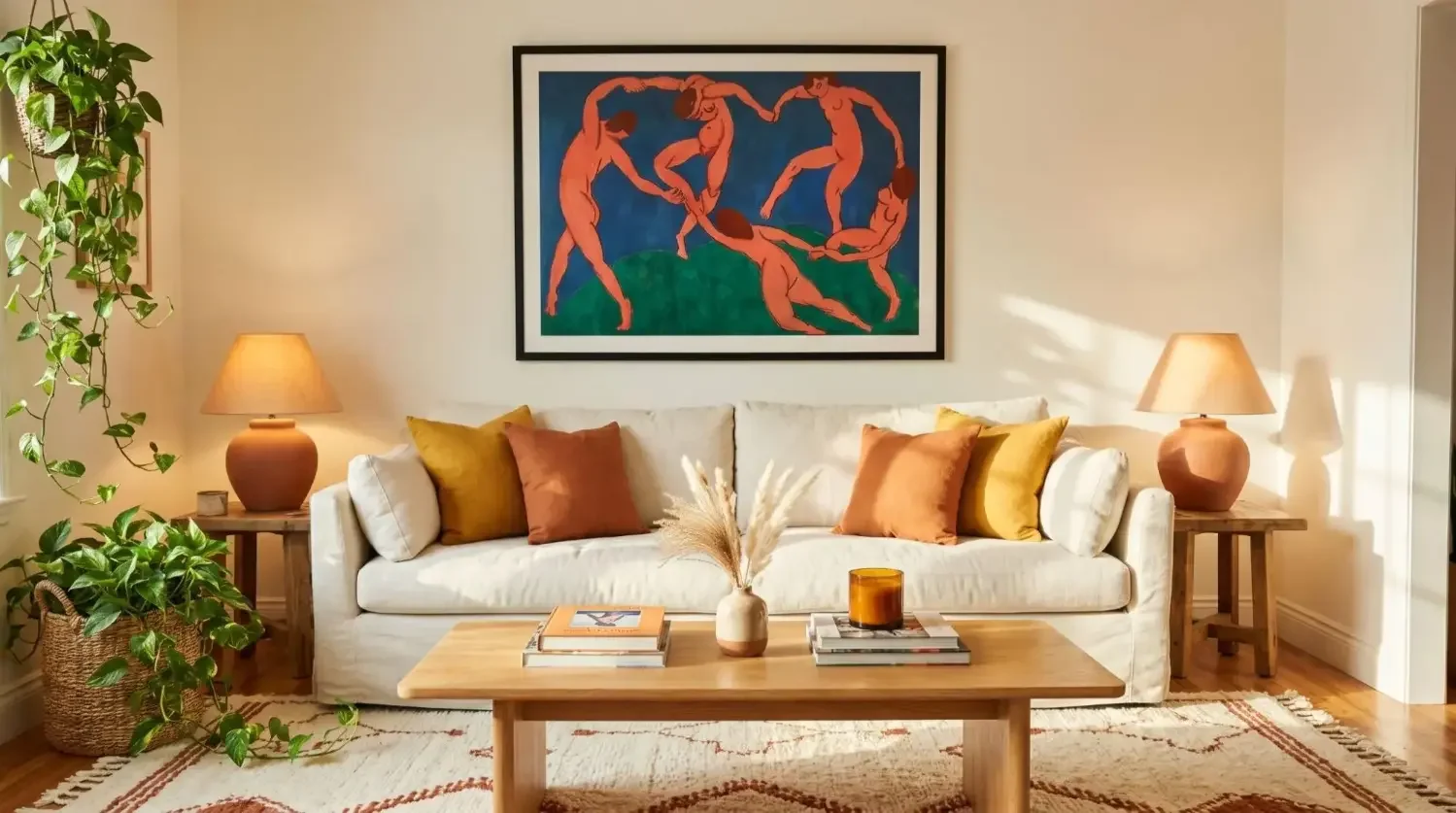
The living room is the most natural home for large abstract wall art. A single oversized piece, like one of our 20x20 canvas prints, above the sofa instantly becomes a focal point and gives the space a gallery-like energy. If you prefer a more layered look, a gallery wall combining large and small abstract pieces creates visual rhythm and depth. Either way, let the abstract art anchor your color story. Pick up one or two tones from the piece and echo them in your cushions, throws, or a rug. For more ideas and inspiration tailored to this key space, explore our dedicated guide to abstract living room wall art.
Bedroom

In the bedroom, abstract art should feel soothing rather than stimulating. Opt for minimalist abstract art in soft, muted tones: pale blues, warm whites, sandy beiges. Positioning a piece above the headboard creates a strong visual anchor and makes the bed feel intentional and designed. Avoid very busy or high-contrast abstract paintings in this room, as they can work against the sense of calm you want to cultivate.
Home Office

Your home office is the perfect place to experiment with bolder, more stimulating abstract wall decor. A geometric abstract canvas or a vibrant acrylic painting can energize the space and spark creativity during long work sessions. Keep the piece at roughly eye level when seated so it feels motivating rather than distracting. A single strong abstract canvas art piece is often more effective here than a full gallery wall.
How Do You Build a Gallery Wall with Modern Abstract Art?
A gallery wall is one of the most impactful ways to display abstract wall art at home, and it doesn't have to be complicated. Follow these five steps to build one with confidence.
- Start with a focal piece: choose your largest or most striking abstract canvas art and position it at eye level as the visual anchor of the display;
- Mix sizes for rhythm: combine large abstract prints with smaller pieces to create movement and keep the eye engaged across the wall;
- Balance colors across the arrangement: distribute warm and cool tones evenly so the wall feels cohesive rather than chaotic;
- Leave consistent spacing: aim for two to three inches between each piece for a clean, intentional look that lets each work breathe;
- Plan before you hang: lay everything out on the floor first, trace frames onto paper, and tape the templates to the wall to preview the full layout before committing.
With Mixtiles, this process becomes even simpler. You can design your layout digitally, preview how it will look on your wall, and then hang your tiles using the adhesive backing. No nails, no guesswork, and no permanent marks left behind.
Want to visualize your layout before hanging a single nail? Try our builder to create stunning gallery walls. It is the perfect way to design your dream picture wall.
Can You Mix Abstract Art with Personal Photos on the Same Wall?
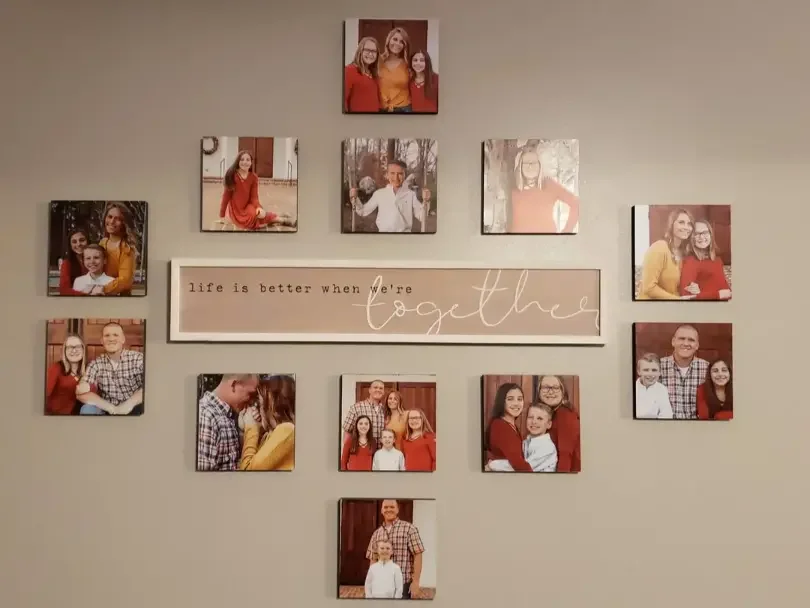
Yes, and it often looks better than an all-abstract or all-photo display. Mixing abstract wall decor with personal photographs adds warmth and storytelling to a curated arrangement. The key is consistency in framing and spacing so the two types of imagery feel like they belong together. Here are four ways to make the combination work beautifully.
- Use a consistent frame style or color across both abstract prints and personal photos to visually unify the display;
- Alternate abstract tiles and personal photographs for a balanced rhythm that keeps the eye moving naturally;
- Convert some personal photos into an abstract-leaning finish by using black and white edits or tight, textural crops that remove obvious context;
- Use abstract pieces as visual breathing space between emotionally significant photographic moments.
This is exactly where Mixtiles shines. You can print your personal photos as photo tiles in the same format and frame style as abstract art prints, creating a seamless, cohesive wall that feels both personal and designed. Mixtiles also offers Fine Art Prints across its formats, so you can combine licensed abstract artwork with your own photography in one unified display.
How Do You Hang Abstract Art Without Damaging Your Walls?
One of the biggest barriers to decorating with modern abstract art for home is the fear of making permanent holes or marks. This concern is especially real for renters or anyone who likes to refresh their wall decor regularly.
The answer is to use an adhesive-based hanging system designed for repeated repositioning. Our complete guide to hanging wall art without nails covers all the options available, from adhesive strips to specialist mounting products. Traditional adhesive strips work for lighter prints, but for heavier canvas pictures, you need a product built specifically for the task. Mixtiles' stick-and-restick adhesive tiles are designed to hold securely for years while peeling away cleanly when you're ready to move or rearrange. The system works on flat painted walls as well as textured walls, brick, wood paneling, and wallpaper. When you remove a tile, simply peel the adhesive pad upward and parallel to the wall surface for a clean release every time.
Before hanging anything, take time to plan your layout on the floor and photograph your arrangement as a reference. Measure carefully, use a level for grid layouts, and start with one statement abstract canvas before adding pieces over time. Building gradually gives you the confidence to experiment freely without the stress of committing too soon.
Modern abstract art for home doesn't need to feel intimidating or out of reach. Whether you're drawn to soft minimalist abstract compositions, bold colorful abstract painting, or graphic geometric wall art, the right piece can completely transform how a room feels. Start with intention. Understand your space, your color palette, and the mood you want to create, then build from there. With flexible tools like Mixtiles, you can experiment freely, rearrange as your tastes evolve, and bring real personality to every wall in your home. Your walls deserve more than blank space.
Turn your walls into your personal art gallery with no nails and no commitment.Create your abstract art display using our repositionable photo tiles.
Frequently Asked Questions
How do I choose the right size of abstract art for my wall?
As a general rule, wall art should cover about 60 to 75 percent of the available wall space above furniture. For a sofa, aim for a piece roughly two-thirds its width. Going slightly larger than feels comfortable is usually the right call, as art that is too small tends to look lost.
Should modern abstract art match the colors in my room?
It doesn't need to match exactly, but it should relate to your existing palette. Choose a piece that shares at least one or two tones with your furniture or textiles. A complementary contrast, such as warm art in a cool-toned room, can also work beautifully as long as the overall balance feels intentional.
Does modern abstract art go out of style?
Good abstract art is timeless by nature. Because it is not tied to a specific trend or subject, it tends to outlast more literal decorative styles. Investing in pieces you genuinely respond to emotionally, rather than chasing trends, is the best way to ensure they remain relevant in your home for years.
Where can I find affordable modern abstract art for my home?
Affordable abstract art is widely available through online print marketplaces, local art fairs, student exhibitions at art schools, and emerging artist platforms. Buying prints rather than originals is a practical way to access high-quality abstract art at a fraction of the cost, without compromising on visual impact.

Be the first to know — deals, news & decor ideas.
By clicking you agree to the Terms of Use & Privacy Policy